
What Is Ikat?

The Modern Touch of a Traditional Art: What Is Ikat?
One of the oldest and most captivating weaving techniques in the world, Ikat is currently experiencing its golden age on both runways and in interior architecture. But do you know the story behind this special fabric, said to carry a soul in every pattern? In this article, we take a close look at the details of the Ikat art form that spread from Central Asia to the world, its production stages, and why it is so highly valued.
What Is Ikat? (Meaning and Origins)
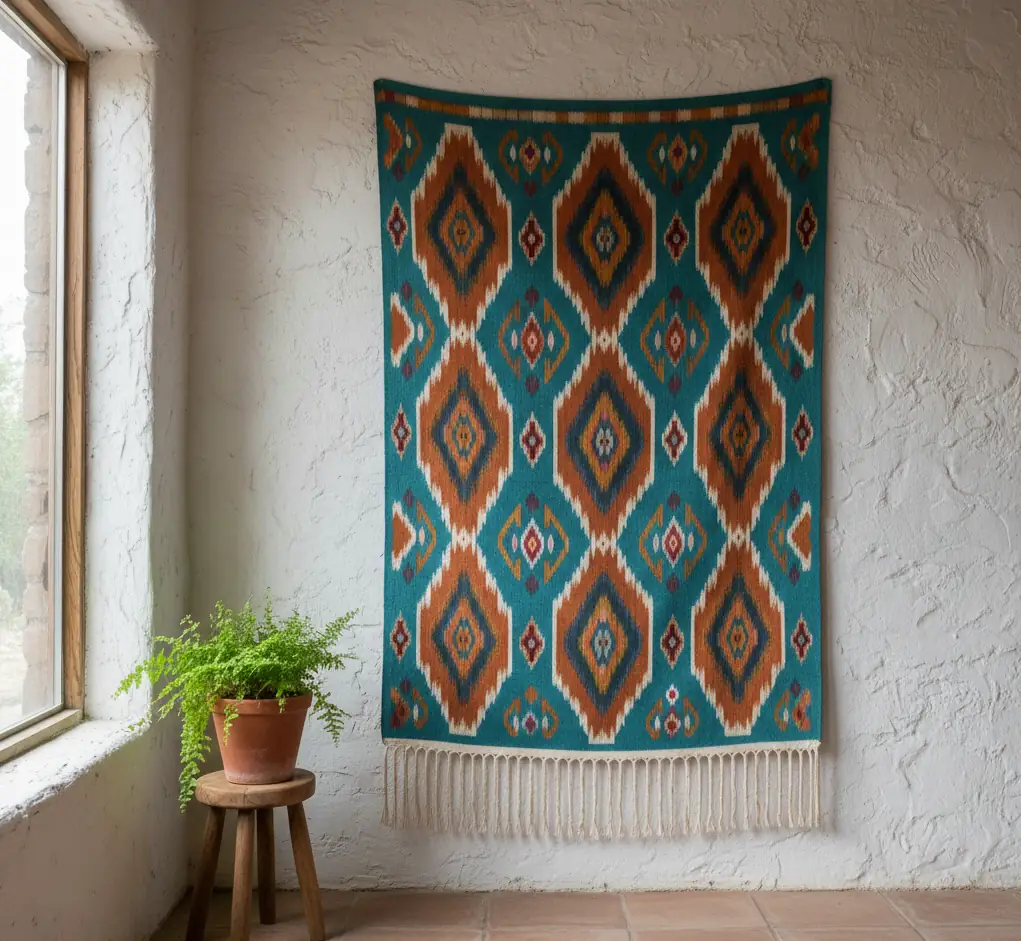
The word Ikat comes from the Malay-Indonesian word "mengikat," meaning "to tie" or "to bind." The fundamental difference that sets Ikat apart from other patterned fabrics is that the design is not printed onto the fabric after weaving — instead, the threads are dyed before they are woven. In fabrics produced with this technique, the edges of the patterns appear slightly "cloudy" or "feathered."
This imperfect perfection is Ikat's signature look and is considered proof of handcraftsmanship.
How Is Ikat Fabric Made? Where Patience Meets Art
Ikat production requires mathematical precision and great patience. The process generally consists of the following steps:
- Design and Planning: The pattern to be created is determined in advance and the threads are divided into groups.
- Binding (Resist Dyeing): The threads are tightly bound at the sections that should not be dyed, using wax or cord.
- Dyeing: The threads are submerged in dye baths. The bound sections do not absorb dye. For multicolored patterns, this process is repeated multiple times.
- Weaving: The dried and colored threads are set up on the loom. As weaving begins, the renowned patterns emerge as if by magic.
What Are the Types of Ikat?
The Ikat technique is divided into three main categories based on the direction of the threads used:
- Warp Ikat: Only the vertical threads (warp) are dyed — the most common type.
- Weft Ikat: Only the horizontal threads (weft) are dyed, making it more difficult to control the pattern during weaving.
- Double Ikat: The highest-level category, where both warp and weft threads are dyed. Produced by very rare master craftspeople in countries such as India and Japan, with zero margin for error.
Ikat in Modern Decoration and Fashion
Ikat is not just an ancient tradition — it is also a timeless style icon. Today it appears frequently in the following areas:
- Cushions and Upholstery: Ikat-patterned pillows can instantly add a bohemian and luxurious feel to your living room.
- Clothing: Ethnically patterned dresses and kaftans are indispensable summer wardrobe pieces.
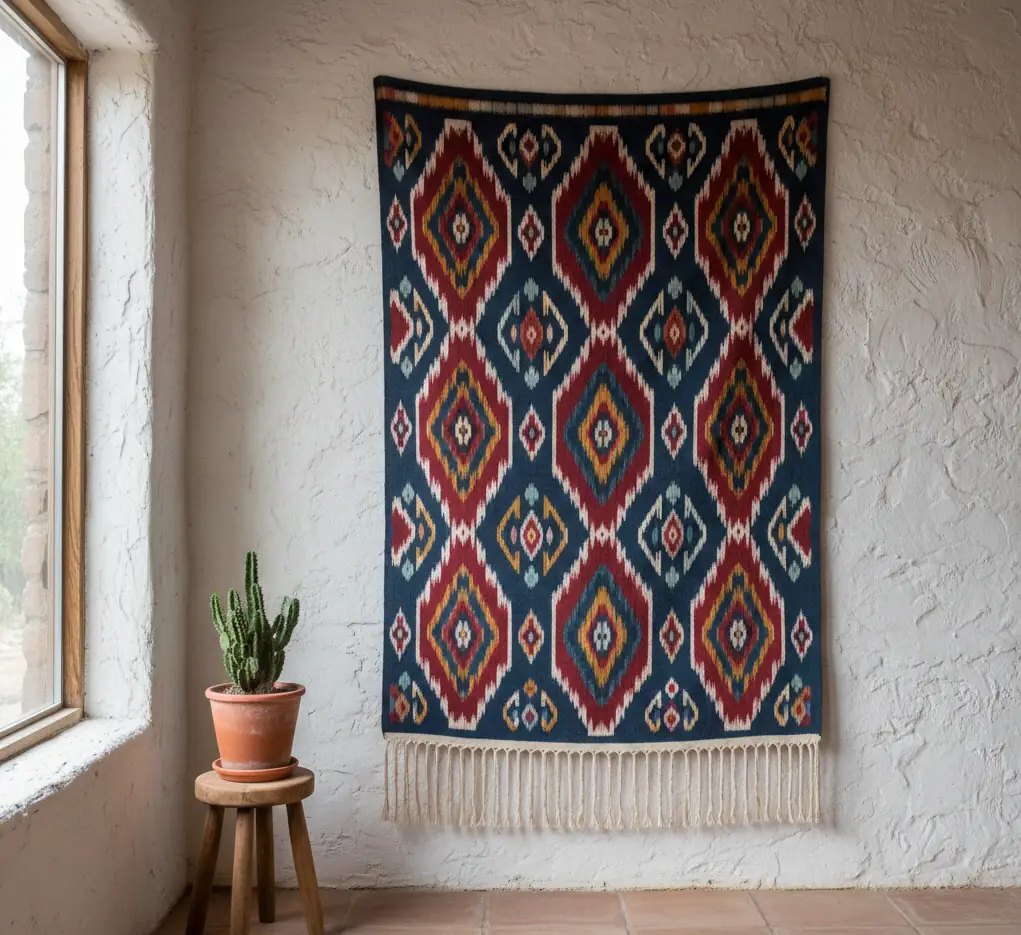
- Wall Art: A real Ikat fabric in a frame, used in place of a painting, transforms the character of a space.
Editor's Note: When you purchase a genuine handwoven Ikat fabric, you are essentially buying a work of art. No two Ikat patterns are ever exactly alike.
How to Care for Ikat Fabric?
Since Ikat fabrics are generally made from silk or cotton, they are delicate.
- Washing: Dry cleaning is preferred where possible.
- Hand Washing: Can be gently washed by hand with cold water and mild shampoo.
- Sunlight: Should not be dried in direct sunlight, to preserve the vibrancy of the patterns.
In Summary
Ikat — a dance between traditional motifs and the modern world — is the finest representative of the value placed on handcraftsmanship. By making room for these patterns in your home or wardrobe, you can keep a thousands-of-years-old culture alive.