
What is Vintage Rug?

A Timeless Journey: The Vintage Rug Guide – What It Is, How to Choose One, and How to Use It at Home
One of the strongest trends in home décor in recent years has been the "return to nostalgia." However, this return is not about accepting the old as it is, but about blending it with modern life. And the most powerful player at the center of this movement is, without a doubt, the vintage rug. So what are the elements that elevate a rug from simply being "old" to belonging in the "vintage" category? Let's take a closer look at the history woven between the threads.
1. What Exactly Is a Vintage Rug?
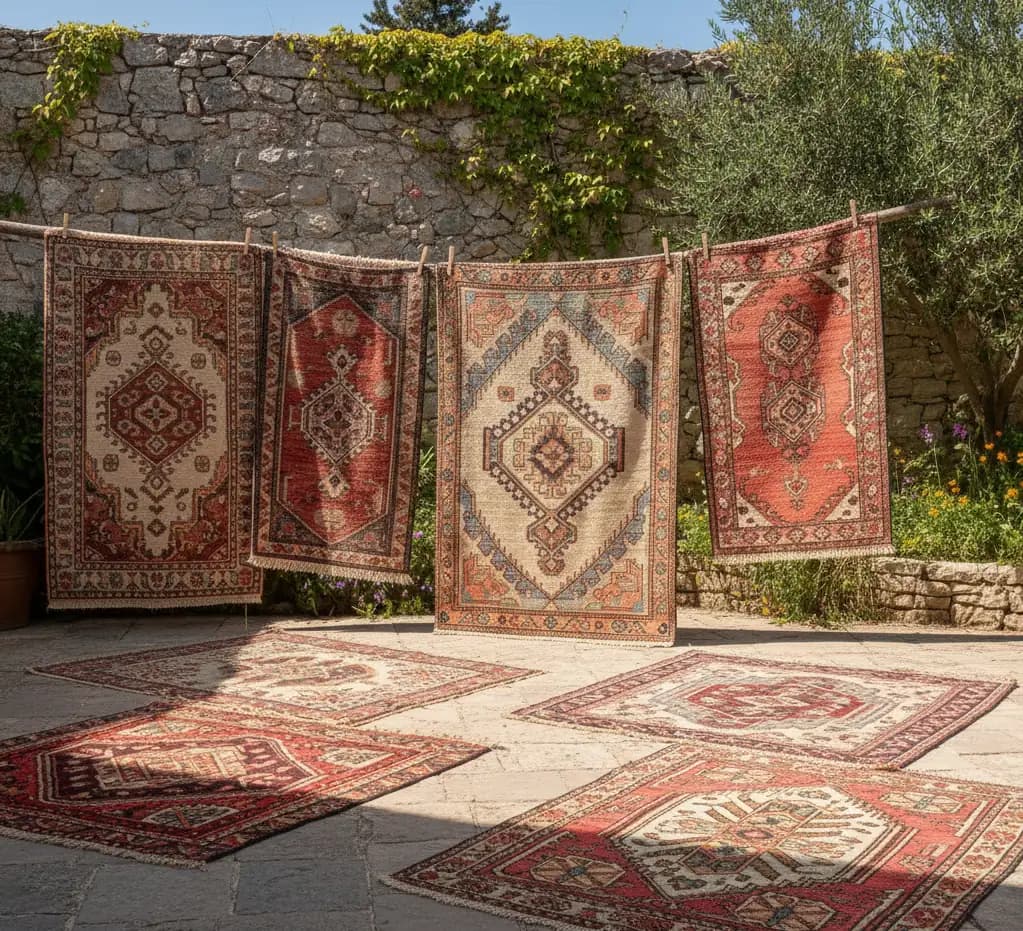
Not every old rug is a vintage rug. For a rug to earn this title, it generally needs to have a history of between 20 and 100 years (those over 100 years fall into the "antique" category). Unlike mass-produced factory products, vintage rugs were typically woven by women at their looms over months of labor in villages across Anatolia, Iran, the Caucasus, or Central Asia. Their greatest distinguishing feature is that the natural dyes and wool threads used oxidize over time, becoming "noble" and taking on those uniquely beautiful pastel tones.
Vintage Rug Types
There are three main vintage types you will encounter on the market:
- Original (Authentic) Vintage: Rugs that have retained their original patterns from the day they were woven, but have experienced natural wear and color fading through the effects of time.
- Overdyed Rugs: Created by trimming handwoven rugs that were considered past their useful life or whose colors had become too mixed, then dyeing them in a single color (usually vibrant tones) using special techniques. An essential in modern loft apartments.
- Patchwork Vintage: Models formed by cutting the intact sections of different old rugs and piecing them together — offering a true collage art experience.
2. Why Should You Buy a Vintage Rug? (Advantages)
Why choose a vintage piece over a modern factory-made rug?
A. Character and Story Every motif on a vintage rug carries meaning. It reflects the weaver's emotions at the time, their regional culture, and their connection to nature. What you place in your home is not just an object — it is a story.
B. An Ecological and Sustainable Choice Producing a new rug consumes liters of water and chemicals. By choosing a vintage rug, you make use of what already exists and contribute to a sustainable approach to decoration — the finest example of the "slow decoration" philosophy.
C. Natural and Healthy Materials Old rugs are made of 100% wool, cotton, or silk. They contain no synthetics, nylon, or carcinogenic adhesives. Natural fibers breathe and help maintain the air quality in your home.
3. The Art of Using Vintage Rugs in Decoration
Placing a vintage rug correctly can instantly transform the entire energy of a room. Here are some techniques used by interior designers:
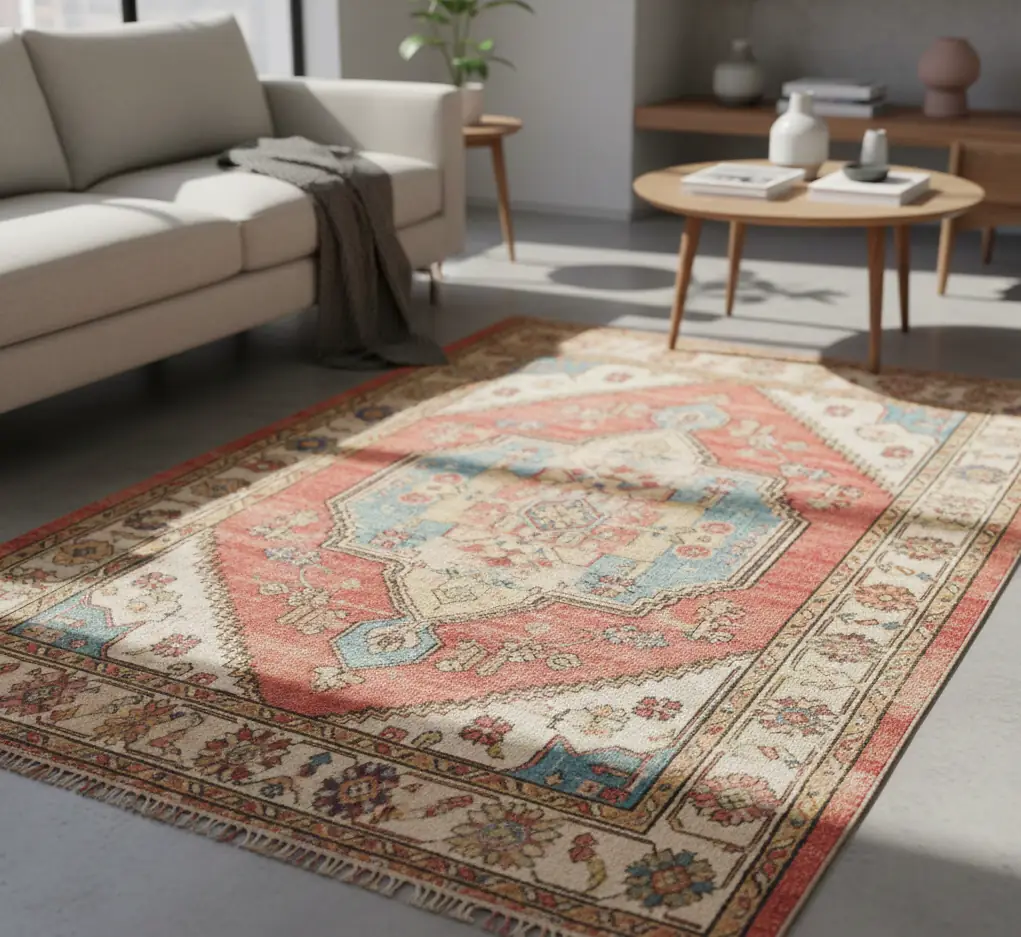
Modern and Minimalist Balance If you have white walls and very plain furniture, a distressed Turkish rug gives the room the "warmth" it needs. You can break the coldness of minimalism with the texture of a vintage rug.
The "Layering" Trend A technique that has become very popular in recent years: lay a large, flat, affordable rug such as jute or sisal as the base layer. On top of it, place a smaller but striking vintage rug as the focal point. This creates depth and a sense of luxury in the room.
Vintage Runners in the Kitchen and Hallway Dark-colored or overdyed vintage runners work wonders in front of kitchen counters or in hallways. Thanks to their ability to conceal dirt and their durability, they can be used for years even in these high-traffic areas.
4. What to Look Out for When Buying and Caring for Your Rug
Buying Tips:
- Check the Back: If the knots on the back of the rug are irregular and clearly handmade, it is genuinely hand-woven.
- The Smell Test: If you detect a strong smell of dampness or chemicals, the cleaning process may have been carried out incorrectly.
- Embrace the Imperfections: Slight color inconsistencies or small irregularities along the edges prove that the rug is a genuine handmade piece, not a fake.
Care and Cleaning:
- Never Use Chemicals: Heavy-duty rug shampoos sold in supermarkets can damage natural plant-based dyes.
- Friendly with the Sun, but Keep Your Distance: Air your rug out occasionally, but do not leave it in direct sunlight for months on end to prevent excessive color fading.
- Professional Washing: Every 2–3 years, entrust it to a specialist business that understands handwoven rugs.
Conclusion: A Heritage with Investment Value
Buying a vintage rug is not just a decorative decision — it is also an investment. When properly cared for, these rugs do not lose their value; on the contrary, they become more precious over time. For adding soul to your home, impressing your guests, and creating an atmosphere that makes you feel truly at ease, vintage rugs will be your most faithful companions.