
The Origins and History of Handwoven Kilims

The Heritage Woven Knot by Knot: The Origins and History of Handwoven Kilims
A story stretching from the steppes of Anatolia to the vast plains of Central Asia... Handwoven kilims are not merely household items — with the motifs they carry, they are like silent diaries narrating the beliefs, sorrows, joys, and connection with nature of an era. So where do the roots of this ancient art, today an indispensable part of modern décor, actually lie?
Here is everything you need to know about the thousands-of-years-long journey of handwoven kilims.
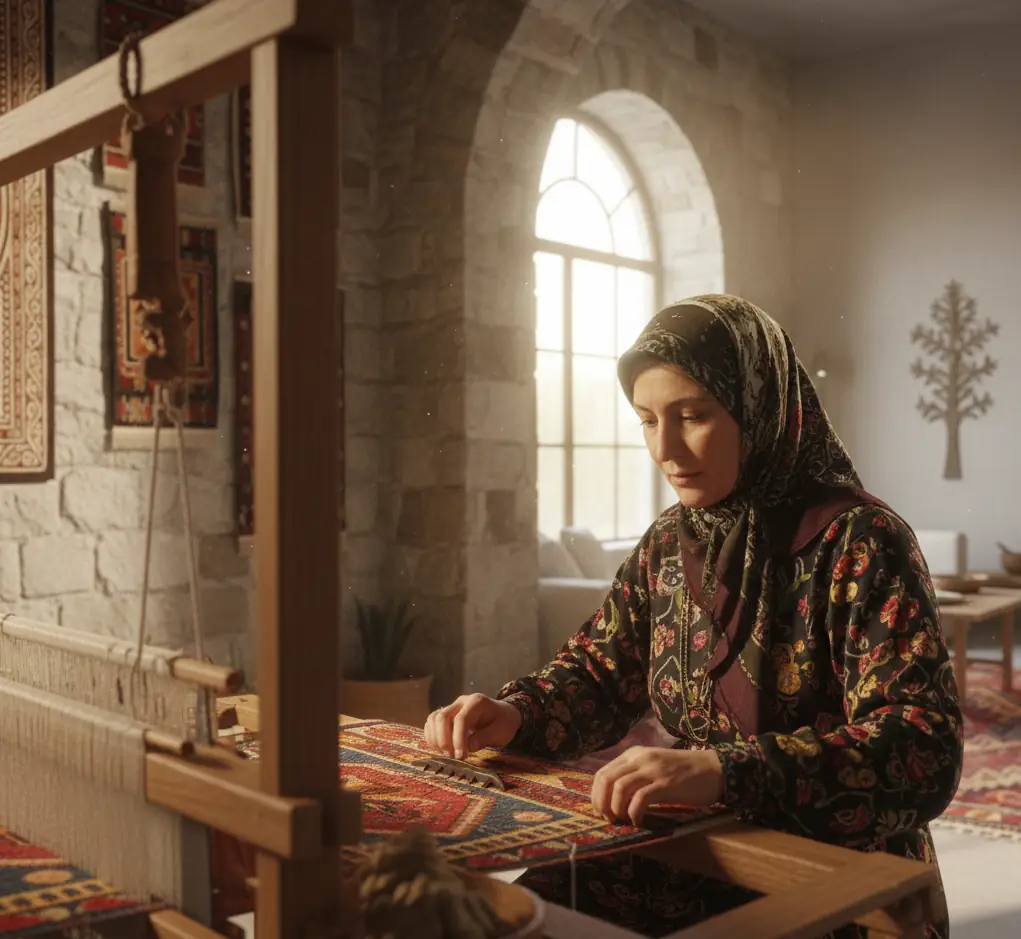
1. The Birth of the Kilim: Art Born from Necessity
The origins of kilim weaving are directly connected to the transition to settled life and animal husbandry. Humankind developed flat weaving techniques by spinning sheep's wool to meet the need for warmth and shelter.
- First Steps: Archaeological findings show that the flat weave (kilim) technique is far older than knotted rugs.
- Nomadic Culture: Due to their light weight and ease of folding, kilims adapted perfectly to the nomadic way of life — used in tents as floor coverings, room dividers, or sacks.
2. Anatolia: Where the Heart of the Kilim Beats
When the word "kilim" is mentioned anywhere in the world, Anatolia is undoubtedly the first geography that comes to mind. Excavations carried out in this land confirm that it was a center of weaving.
Çatalhöyük Findings
Wall paintings discovered at the Çatalhöyük excavation site, dating back to around 7000 BC, bear a striking resemblance to present-day kilim motifs. This is the greatest proof of how deep a history weaving culture has in Anatolia.
Seljuk and Ottoman Period
With the arrival of the Turks in Anatolia, weaving traditions brought from Central Asia blended with local culture. During the Seljuk and Ottoman periods, kilims adorned palaces, were donated to mosques, and became prestigious goods exported to Europe.
3. The Language of Motifs: Every Knot Tells a Story
The most important feature that sets handwoven kilims apart from factory-made products is the symbolism woven into them. A woman weaver does not merely add color to her kilim — she weaves her soul and dreams into it.
- Hands on Hips (Eli Belinde): Symbolizes femininity and abundance.
- Ram's Horn (Koçboynuzu): Represents strength, masculinity, and heroism.
- Tree of Life (Hayat Ağacı): Depicts immortality and belief in the afterlife.
- Scorpion and Eye: Woven for protection against the evil eye and harmful forces.
4. Technical Features of Handwoven Kilims
The elements that make a genuine handwoven kilim valuable lie in the materials used and the craftsmanship:
- Natural Materials: Traditional kilims are generally made from sheep's wool, cotton, or goat hair.
- Natural Dyes: Instead of synthetic dyes, natural dyes obtained from plant roots, leaves, and fruit peels are used. These dyes brighten over time and give the kilim character.
- Flat Weave Technique: Unlike rugs, kilims are woven without knots or pile, making them thinner and usable on both sides.
5. Handwoven Kilims Today
Today, handwoven kilims are seen as part of the Slow Fashion and sustainability movements. In modern interior design, they are among the most preferred ethnic elements for complementing minimalist, Scandinavian, or Boho-Chic styles.
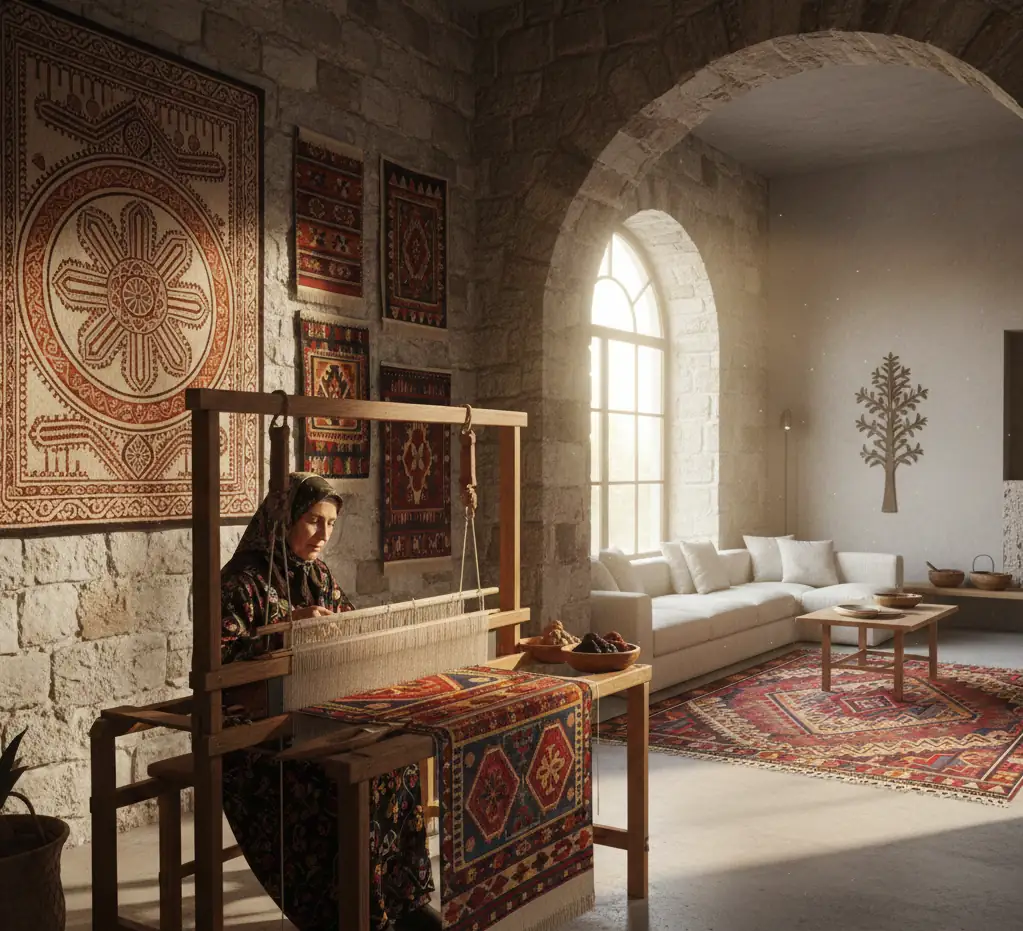
Conclusion: Owning a Kilim Is Touching a Piece of History
When you purchase a handwoven kilim, you are not simply bringing a decorative product into your home — you are bringing a piece of a thousands-of-years-old tradition. These one-of-a-kind works of art are both an investment that gains value over time and a piece of cultural heritage.